

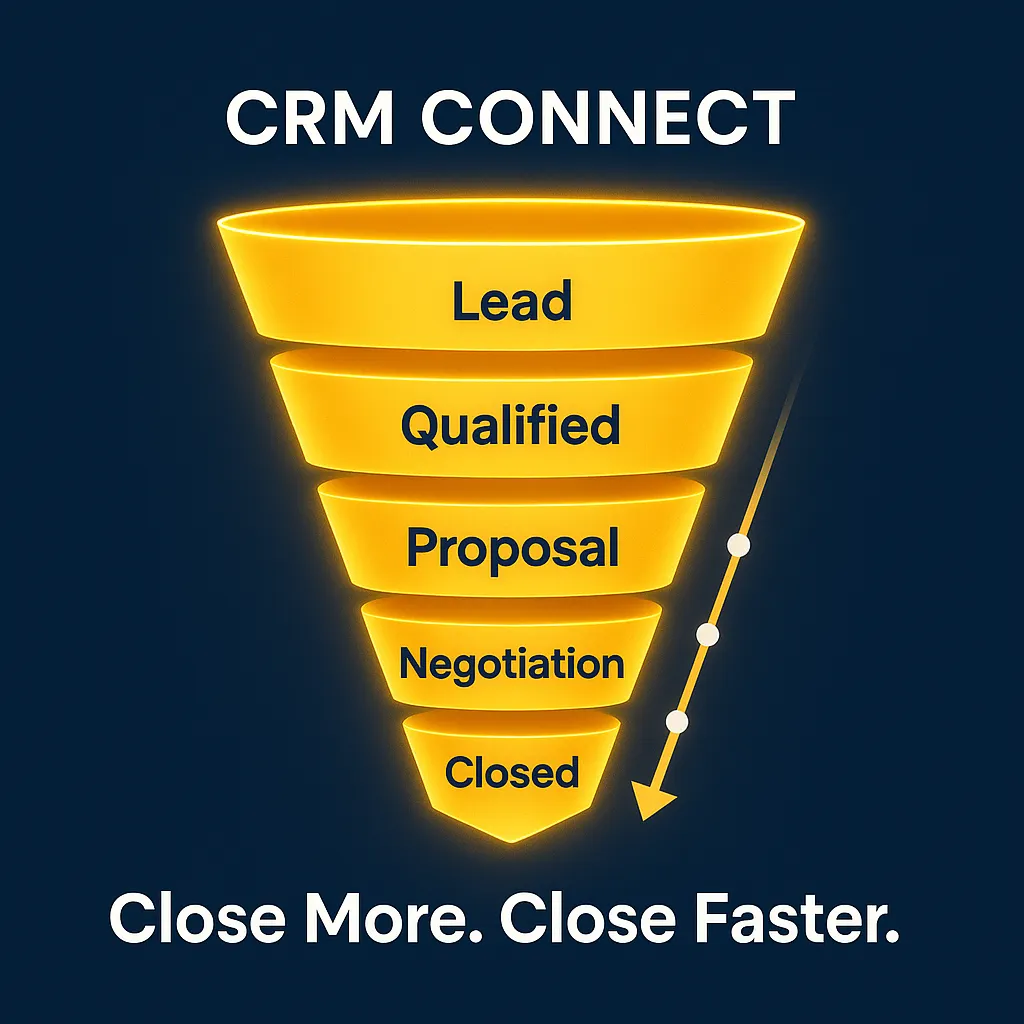
CRM Tip: How to See Your Entire Sales Pipeline at a Glance — No Guessing Required
CRM, Sales Pipeline, Pipeline Visibility
How CRM Pipeline Clarity Puts an End to Guessing in Sales
Imagine opening your CRM and instantly seeing every deal, every stage, and every next action in one clean view. No digging through emails, no “just checking in” guesswork, and no last‑minute surprises at the end of the month. That’s what true pipeline clarity looks like — and it’s exactly what CRM Connect is built to deliver.
What Pipeline Clarity Actually Means
Pipeline clarity means you always know three things: where every deal is right now, what needs to happen next, and how that translates into future revenue. Instead of a hazy list of “hot leads” and “maybes,” you have a structured, visual flow of opportunities moving from first contact to closed‑won (or closed‑lost) with zero blind spots. For business owners, marketers, and sales teams, this turns forecasting from a gut feeling into a confident, data‑backed view of what’s coming.
How a CRM Tracks Every Deal in Real Time
A modern CRM like CRM Connect tracks each opportunity the moment it enters your world — from a web form, ad campaign, referral, or manual entry. As your team sends emails, books calls, logs notes, or updates amounts, the system refreshes automatically. Deal values, close dates, and probability percentages are always current, so your pipeline reflects what’s actually happening, not what someone remembers to report on Friday afternoon. This real‑time tracking also rolls up into dashboards, giving leaders a live snapshot of progress toward targets at any moment in the month or quarter.
What Each Pipeline Stage Should Include
Clear stages are the backbone of pipeline visibility. While every business is unique, a healthy CRM pipeline usually includes:
- New Lead: Contact details, lead source, owner, and first outreach task scheduled.
- Qualified: Budget, authority, need, and timeline (or similar criteria) captured, with a defined opportunity value.
- Proposal / Quote Sent: Proposal shared, decision‑makers identified, and follow‑up meeting or call booked.
- Negotiation: Objections logged, terms discussed, and clear next steps with dates.
- Closed‑Won / Closed‑Lost: Final outcome, reason codes, and handoff or nurture plan recorded.
When every stage has required fields and a clear definition of “done,” there’s no ambiguity about where a deal belongs or what’s missing.
How Clarity Eliminates Surprises and Missed Opportunities
Pipeline surprises usually come from two things: deals quietly stalling and deals slipping through the cracks. With CRM Connect, aging indicators, activity timelines, and automated reminders highlight any opportunity that hasn’t been touched in a while. You can instantly see which deals are at risk, which reps are overloaded, and which campaigns are actually driving revenue. That means fewer “I thought someone was on that” moments and more proactive saves — like a quick call that revives a nearly lost deal or a timely upsell to a warm account.
Practical Steps to Achieve Full Pipeline Visibility
To turn your CRM into a source of pure pipeline clarity, start with a simple plan:
- Define your stages together: Align sales, marketing, and leadership on stage names and entry/exit criteria.
- Set required fields: Make key data — value, close date, owner, next action — mandatory before moving a deal forward.
- Automate reminders and tasks: Use workflows so no follow‑up is ever forgotten, even on busy days.
- Review dashboards regularly: Make pipeline reviews a weekly habit so trends and bottlenecks are spotted early.
When your CRM is set up this way, you don’t have to guess what’s in your pipeline — you can see it, trust it, and act on it with confidence.