

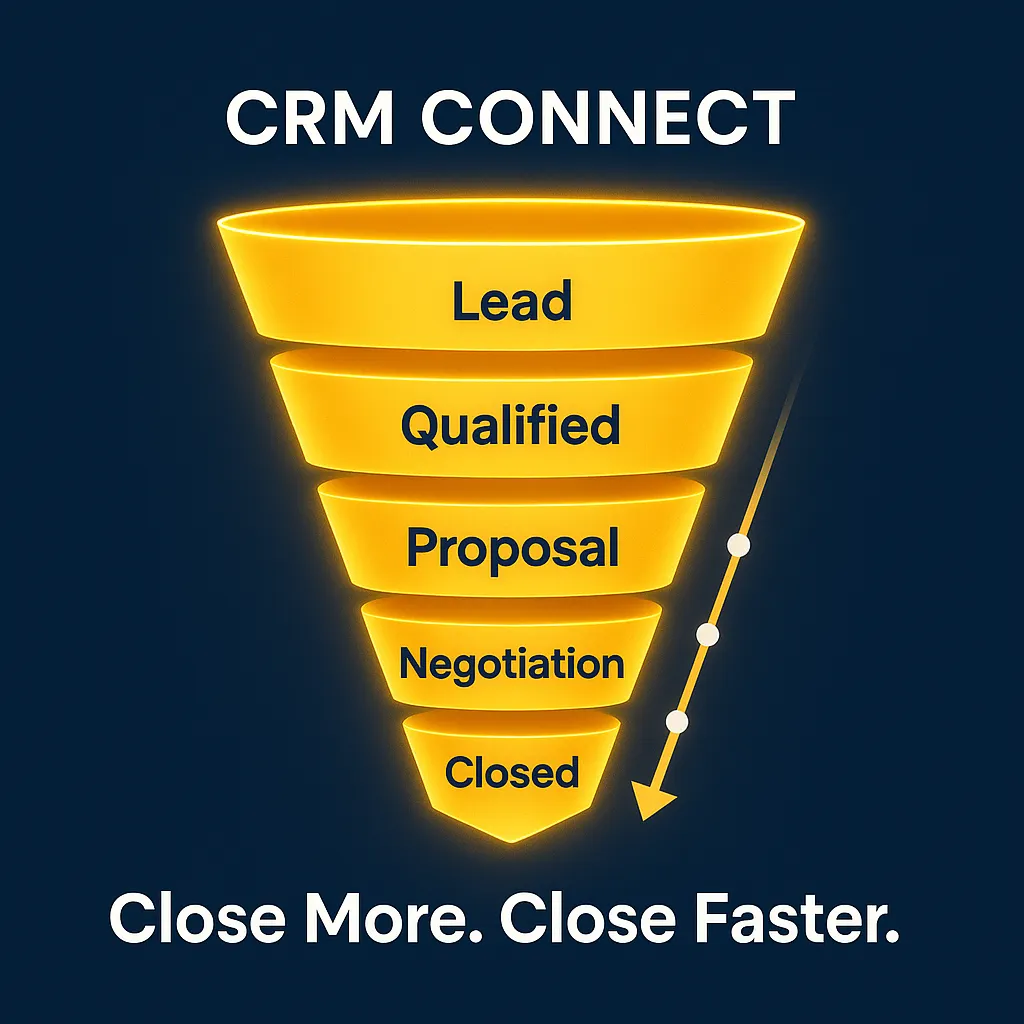
Every Deal Is Real Revenue: How to Keep Your Sales Pipeline Clean and Moving
Sales, CRM, Pipeline Management
How to Keep Your Sales Pipeline Clean, Active, and Generating Real Revenue
Every deal in your pipeline represents real revenue, not just a line on a report. When your CRM is cluttered or out of date, it becomes harder to see which opportunities are alive, which are stuck, and which should be closed out. The good news: with the right habits and a bit of automation, you can keep your pipeline clean, your team aligned, and your deals moving forward consistently.
Why Deals Stall and Pipelines Get Cluttered
Deals rarely die in a dramatic fashion. Instead, they fade away quietly. A buyer gets busy, a decision-maker leaves, or your rep simply forgets to follow up after a “great call.” Over time, these half-forgotten opportunities pile up in your CRM, making the pipeline look bigger and healthier than it really is.
Pipelines also get cluttered when there is no clear definition of stages, no consistent follow-up cadence, and no accountability for keeping records current. Reps keep “hope deals” open just in case. Notes don’t get logged. Next steps are vague. The result is a pipeline full of maybes and someday deals that are unlikely to close.
The Real Cost of Stagnant Opportunities
Stagnant deals are more than a minor annoyance; they distort your entire view of the business. Forecasts become unreliable because your “pipeline coverage” is inflated by opportunities that should have been closed out months ago. You plan hiring, marketing campaigns, and inventory around numbers that are not real.
There is also a hidden opportunity cost. Every minute spent chasing an unresponsive prospect is a minute not spent nurturing a warm lead or expanding an existing account. For business owners and marketers, that misallocation of time and attention translates directly into lost revenue and slower growth.
How CRM Automation Keeps Deals Progressing
This is where tools like CRM Connect shine. Automation does not replace the human relationship; it simply makes sure no deal slips through the cracks. You can set up reminders so that every opportunity always has a next step and a due date. If a prospect has not been contacted in, say, 10 days, the system nudges the owner to reach out.
Triggers and alerts can be tied to buyer behavior as well. When a contact opens a proposal, clicks a pricing link, or replies to an email, your CRM can automatically move the deal forward, assign a task, or notify the right team member. Instead of relying on memory and sticky notes, your pipeline moves based on real activity, in real time.
Establishing Simple Pipeline Hygiene Habits
Technology helps, but habits make the difference. Start with a weekly pipeline review. Ask: Which deals have been idle too long? Which ones are clearly not moving forward? Close those out or move them back to nurture, and free your team to focus on active opportunities.
Next, make “no deal without a next step” a team rule. Every opportunity must have a scheduled follow-up, a clear owner, and a defined objective. Encourage reps to update notes immediately after calls and to log outcomes honestly. With CRM Connect automating reminders and status changes, these hygiene habits become easier to maintain day after day.
What a Healthy, Active Pipeline Looks Like
In a healthy pipeline, you can quickly answer three questions: What is in play? Where is each deal right now? And what is happening next? Stages are clearly defined, deal counts are realistic, and there are very few “zombie” opportunities lingering without activity. Your team trusts the numbers because they see them updated automatically, every day.
For business owners, marketers, and CRM users, this clarity is powerful. Marketing can see which campaigns feed the most qualified deals. Sales leaders can coach around real bottlenecks instead of guessing. And you, as a leader, can look at your CRM and know that the revenue in your pipeline is not imaginary—it is real, active, and moving steadily toward closed-won.