

The 27% Advantage: Why CRM Users Close More Deals Than Those Without One
CRM, Sales Performance, Close Rates
Companies Using CRM Close 27% More Deals: What That Really Means for You
STAT: Companies using CRM software close about 26–27% more deals than those that don’t. The difference usually isn’t their product or pricing — it’s their system. Let’s unpack what the research says, why systems beat “heroic selling,” and how you can build a CRM-powered engine that reliably boosts your close rate.
What the Research Actually Says About CRM and Close Rates
Recent CRM benchmarks show that sales teams using CRM close roughly 26% more deals and generate significantly more revenue per rep than those working from inboxes and spreadsheets alone (SearchLab CRM statistics, 2026). When CRM is fully adopted, companies also report around 29% revenue growth and a 34% jump in sales productivity. Meta-analyses from Nucleus Research put the average return at about $8.71 for every $1 invested in CRM, rising even higher when AI features are used. In short: CRM isn’t just “nice to have” software — it’s a measurable sales advantage.
Why a System Outperforms Talent and Luck Alone
Every business knows at least one “rainmaker” rep who seems to close deals by instinct. The problem is that instinct doesn’t scale, and it definitely doesn’t survive vacations, turnover, or a busy quarter. Research consistently shows that structured sales processes plus digital tools outperform ad‑hoc selling, especially in B2B environments where cycles are longer and more complex. A CRM turns good selling habits into a repeatable playbook: everyone follows the same stages, activities are trackable, and opportunities don’t depend on one person’s memory. Talent still matters, but a system makes average reps better and great reps unstoppable — and that’s where the extra 27% of deals comes from.
What Specifically About CRM Drives Higher Close Rates
Several core CRM capabilities directly affect your ability to close:
- Speed: Automated workflows and templates cut response times from hours to minutes. Some studies show that replying within five minutes can make a lead up to 21x more likely to convert. CRM keeps reps working from prioritized queues instead of a cluttered inbox.
- Follow-up: Top-performing teams log over 3.7x more follow-ups per deal. CRM reminders, tasks, and sequences make consistent follow-up automatic, so “forgot to call them back” stops killing deals.
- Visibility: With a shared pipeline, you can see every deal’s stage, risk, and owner. Managers can coach in real time, marketing can align campaigns, and no opportunity lives in a private notebook or someone’s head.
- Data and insights: Over time, CRM data reveals patterns: which channels bring the best leads, which messages win, where deals stall. AI‑enabled CRMs go further, scoring leads and flagging at‑risk opportunities so reps focus where it matters most.
How Any Business Can Replicate This Advantage
The good news is that you don’t need a huge team or enterprise budget to tap into these gains. Whether you’re a solo consultant, a growing agency, or a multi-location service business, the same principles apply: centralize your contacts, track every interaction, and standardize your sales stages. Cloud CRM tools like CRM Connect make this accessible with simple pipelines, automation, and integrations with email, calendars, and marketing tools. The key is not just “having a CRM,” but using it as the single source of truth for your sales process.
Practical First Steps to Build Your CRM System
If you want that extra 27% in closed deals, start with a few focused moves:
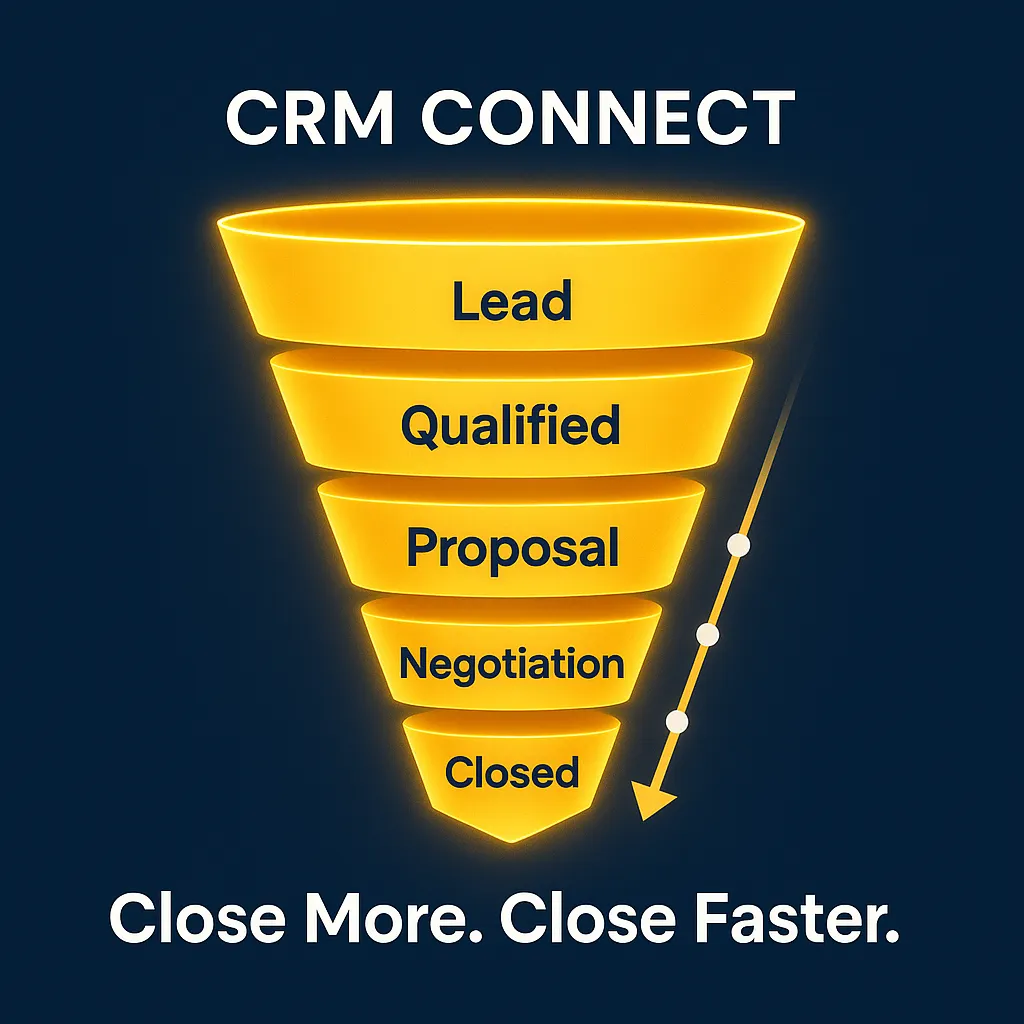
- Define your pipeline stages. Map the real steps from lead to closed-won (for example: New Lead → Qualified → Proposal Sent → Negotiation → Closed). Keep it simple and mirror how you actually sell.
- Centralize your data. Import contacts from spreadsheets, email, and forms into your CRM. From now on, every new lead and activity lives there — no exceptions.
- Standardize follow-up. Create simple sequences: day 0 call, day 2 email, day 5 check-in, and so on. Use CRM tasks and automation so no step is missed, even on busy days.
- Measure and tweak. Review your pipeline weekly: where do deals stall, which sources convert best, who needs support? Use those insights to adjust scripts, offers, and stages.
When you treat CRM as the backbone of your sales system — not just a database — that “27% more deals” stat stops being a headline and starts becoming your reality. Tools like CRM Connect give you the structure; your job is to commit to the process and let the system do the heavy lifting.